Optical Telescope Written by Tammy Plotner
Optical TelescopeWhat is an optical telescope? How does it work? What types of optical telescopes are there? What are some terms I might encounter when I am studying about this type of telescope? What do they mean? What optical telescopes are famous? If you have questions like these, then follow along as we take a closer look at the optical telescope…
What Is An Optical Telescope?
An optical telescope is an instrument used to gather and focus light from a very specific portion of the electromagnetic spectrum. It generally refers to the wavelengths of light which can be perceived by the human eye. These wavelengths are then magnified and studied “optically” – via direct viewing, photographically, or collected on a photo sensor. There are three primary types of optical telescopes: the refractor, the reflector and the catadioptric telescope.
How Does An Optical Telescope Work?
At the heart of all optical telescopes is the major light gathering source. In the optical refractor telescope, this is called the primary objective lens. In the optical reflector telescope, it is known as the primary mirror. In the optical catadioptric design, it is also a primary mirror. These gather the incoming light from a distant object and focus it back along a path called the focal plane. When the light rays re-converge, they form a “real image” or reach a focal point. This image may then be gathered by the optical telescope’s cameras or photo sensors – or it may be magnified by an additional series of lenses called an eyepiece and studied by the human eye.
Source : universetoday.com
Canon DC330 Camcorder
With memory card and internal hard drive camcorders making a push to the front of the line, DVD-based models will soon find themselves occupying the clearance shelves. In fact, there are only a handful of camcorders left that record solely to DVD, and Canon’s DC330 ($379 MSRP) is one of them. There’s nothing antiquated about the DC330’s video performance—it has a better than average quality for a standard definition camcorder in its price range. However, the shape and size of its DVD drive makes the DC330 an uncomfortable device to hold and its menu navigation system is nothing to envy. The camcorder is a good choice for people who must record to DVD and who prioritize strong video quality, but there are too many faults and problems to recommend it for anyone else.
The Canon DC320, which costs $10 less, is essentially the DC330’s fraternal twin—both are identical except the DC320 lacks a USB port and doesn’t come with a remote control. If you’re looking to save more money, Canon offers the lower-end DC310, which has a lower pixel count and a few less features.
The Front (5.50)
The Canon DC330 has a similar design to last year’s DC220 and DC330, but there are a fewer buttons on the back and an entirely different battery compartment design. The front, however, is mostly unchanged. The DC330 doesn’t have a flash or video light and it’s still a tall, slim camcorder with a DVD hatch taking up the entirety of its right side. The lens on the DC330 has no filter thread, a maximum aperture range of f/2.0 – f/5.2, and has the following focal length specs:
Focal length:
2.6 – 96.2mm
35mm equivalent:
41.7 – 2,002mm (16:9 advanced zoom)
47.1 – 1,743mm (16:9 other zoom types)
44.6 – 2453mm (4:3 advanced zoom)
44.6 – 1650mm (4:3 other zoom types)
Still images:
45.2 – 1672mm (16:9)
41.5 – 1536mm (4:3)
The lens also has a built-in, manual lens cover, with the switch being located on the left side. Underneath the lens are two circular sets of holes that look like small snowflakes. This is the camcorder’s internal microphone. The front placement of the built-in mic is a good idea, as it is out of reach from wandering fingers (a problem we saw with the Sony DCR-DVD810).
Source : camcorderinfo.com
Lens Accessories for Your Camcorder
Lens filters and accessories help you capture creative clips without digital manipulation.
There’s nothing more satisfying than finding just the right thing to give your videos a fresh new look. Three types of camcorder lens accessories – lens filters, wide-angle lens adapters and telephoto lens adapters – offer you extra flexibility and creativity when you begin to acquire your footage.
The frustration of not getting everything you want into a shot simply because you can’t physically move any farther back is a common one.
Those clever lens accessory makers provide a wide array of add-on lens adaptors designed to let your camera see more of the horizontal and vertical field of view at a given distance. At some point, wide-angle lenses introduce an unacceptable amount of distortion, which manifests itself as a fish-eye view.
Probably the most flexible type in the category is the “zoom-through” wide-angle adapter. As the name implies, this design lets you increase the viewing angle of your lens, but keeps it’s ability to zoom intact.
Not all wide-angle lenses are of the zoom-through variety. A standard wide-angle diopter provides a larger viewing field, but at a fixed focal length. Once you put it on the camera, you’re restricted to that one wide shot.
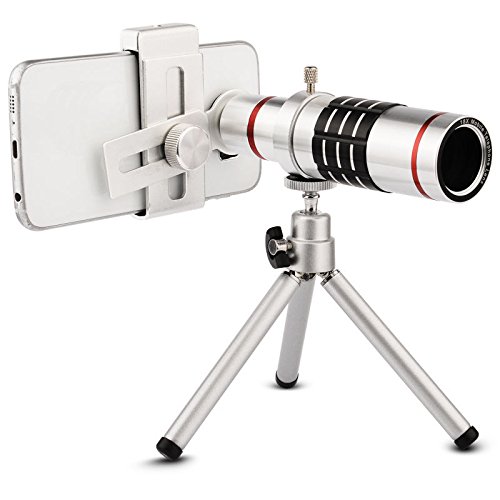
Tele-extenders do just the opposite. These screw onto the front of your camcorder’s lens and expand its long-range zoom capabilities.
A 2x extender affixed to the end of your camcorder lens will let you make objects appear twice as close as they appear without the accessory.
However, with that plus comes a minus. Lens extenders typically restrict the amount of light that reaches your camera’s CCD. So, to get a properly exposed picture with a tele-extender in place, you’ll need to arrange for more light to fall on your subject or you’ll need to open up your aperture, thereby reducing your depth of field. These long-lens accessories are most useful when used outdoors and in other situations where you have plenty of available light.
Another challenge with tele-extenders is that at your camcorder’s widest zoom setting, the barrel of the extender will actually mask a portion of the frame, providing a round window effect instead of a full frame.
With an extreme extender, like a 5x lens, you might only get a full field of view at your camcorder’s maximum zoom. And the resulting images will be quite a bit dimmer than your camera would otherwise produce.
Get Close
At the other end of the lens spectrum are macro units designed for closeup work. These attachments allow you to focus your video camera’s lens nearly on top of an object. Although most camcorders have fantastic default macro capabilities (just see how close you can get to an object with yours), you can use macro attachments to get extreme closeups without getting physically close to the object, which in practice allows you to get more light onto your subject.
These accessories are ideal for videotaping coin or stamp collections, and closeup lenses are often just the ticket for copy-stand work, allowing you to get your camera really close to modest-sized objects so they’ll fill the entire video frame.
The artistic uses of a colored piece of glass (albeit an optical-grade piece of glass) in front of your camera’s lens do not begin to cover the sophisticated applications of lens filters. The most simple and inexpensive is a protective filter, which is a clear piece of glass used to guard the expensive optics of your lens. Glass inherently stops potentially damaging UV radiation, so most protective filters also tout their ability to stop UV light; it can’t hurt and doesn’t cost any more for a UV filter. The next level is a neutral density (ND) filter, which is a gray piece of glass, designed to lower the total amount of light entering the lens without changing its color. This can be useful when you want to open up the aperture for some depth-of-field effects on a bright day. ND filters come in a variety of densities. Another variation on the ND filter is the gradient filter, which you can rotate to diminish the light from the sky for example, allowing you to properly expose two greatly disparate areas of a scene.
Another handy filter for use in the sun is a polarizing filter. It controls reflected light, which comes at the camera in straight, parallel lines. Polarizing filters can reduce glare from water, snow, glass or other non-metal reflective sources and thereby allow you to capture deeper, more saturated colors.
Color correction filters are also available, but camcorders can often do without these filters with careful and intentional manual white balancing techniques. You may find artistic or creative uses for colored filters, however.
Download Full Games for PSP! – iron rain music
I was like you, searching for ways to download full games for PSP. I wanted more games for my system without having to pay ridiculous prices (such as $30 to $50 PER GAME) to get them. The system costs almost $200, why would I want to pay 1/4 of that just for a game!
Well, I did searches on the internet over and over for download full games for PSP only to find nothing. The web sites that I did find were crap. They either had no selection whatsoever or they wanted to pull $20 a month out of my pocket for a limited amount of games. Not exactly a fantastic deal in my opinion.
And I was right. It wasn’t a good deal. Want to know how I know that? Because I found somewhere that I could get UNLMIITED download full games for PSP, and at a great price, too.
The site is called PSP Blender. It’s a gem. For a mere $37 you get a lifetime membership. What does that mean? It means you get access to their over 200,000 downloads for life for a one time price of $37. It’s a hell of a deal.
You get to download full games for PSP and you also get unlimited iron rain music and video downloads for the PSP too. And you NEVER have to pay the fee again after your first time. And if any updates become available for any games or software that you download, you can get the for free. It’s as easy as that.